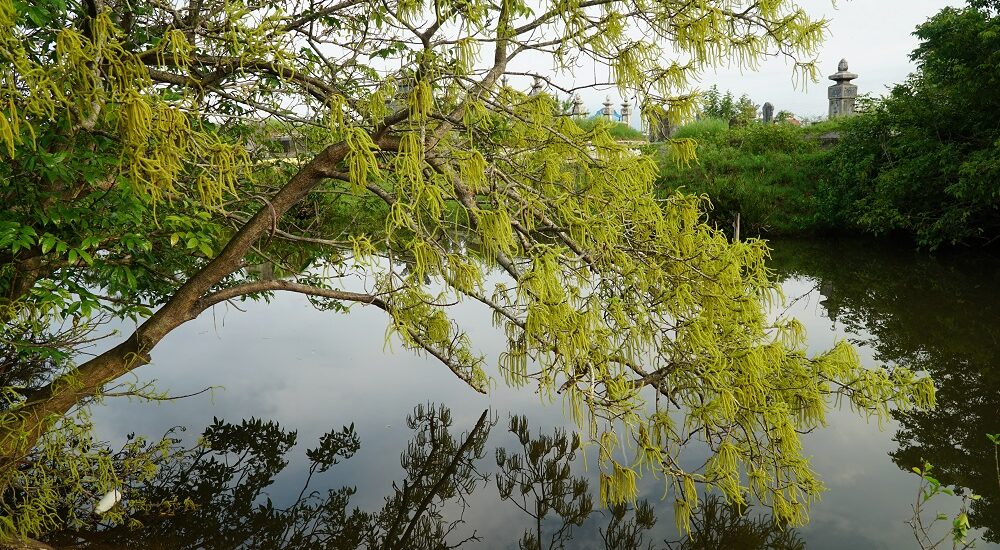
I recently read Dòng Sông Phẳng Lặng (The Serene River) by Tô Nhuận Vỹ, and the image of revolutionary soldiers seeking refuge in the rú—a local word for a wild, wooded forest—lingered in my mind. On my way back from Thuận An Beach one morning, I decided to make a detour and see Rú Chá for myself.
A Visit to Rú Chá
After a long summer, the mangrove forest had almost dried out. The earth around the chá (milky mangrove) trees was firm enough to walk on, giving me a chance to explore corners I had missed during previous visits. Though it was a Sunday morning, few people were around, leaving me to enjoy the quiet sanctuary alone.
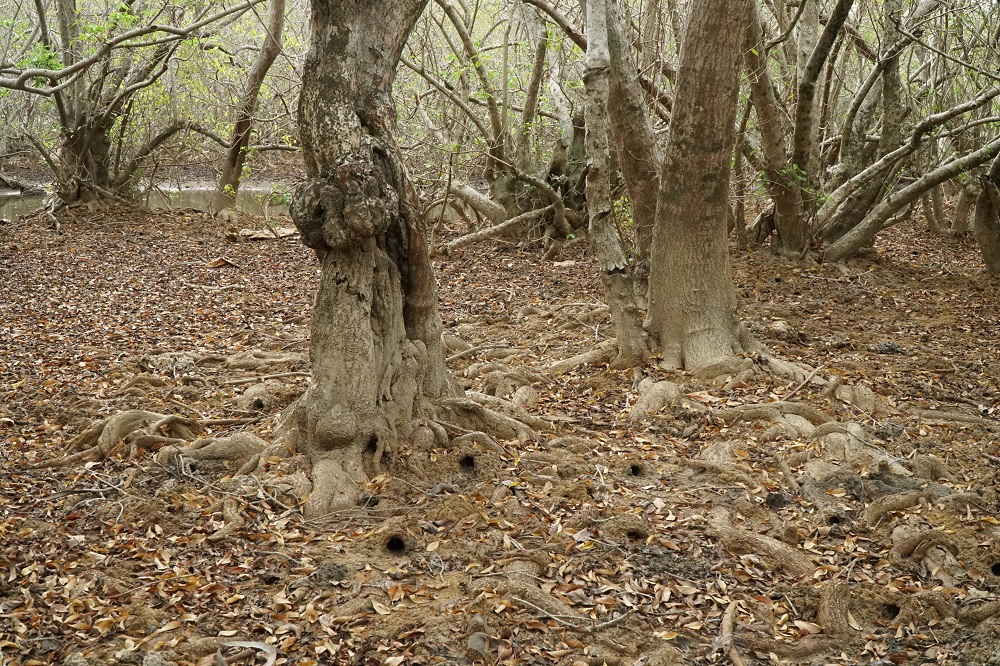
I treaded lightly among the trees, keeping an eye on the ground to avoid stepping on crab burrows. These scattered holes, woven among the tangled chá roots, made me wonder how deep they went and how large the creatures hiding inside were. Soon, when the rainy season arrives, this land—and the crabs’ homes with it—will be submerged under rainwater.
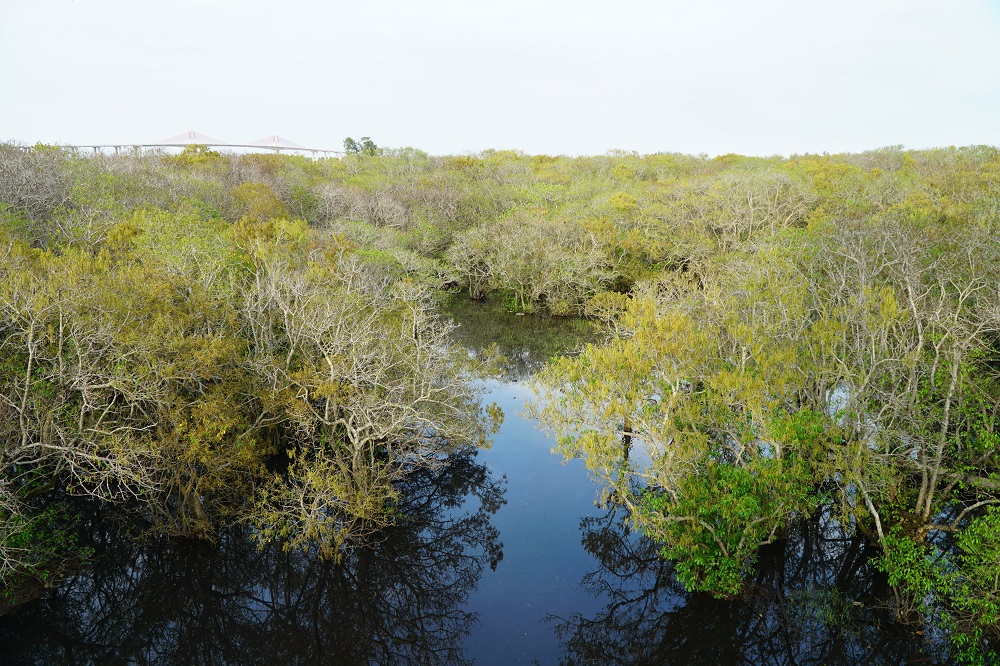
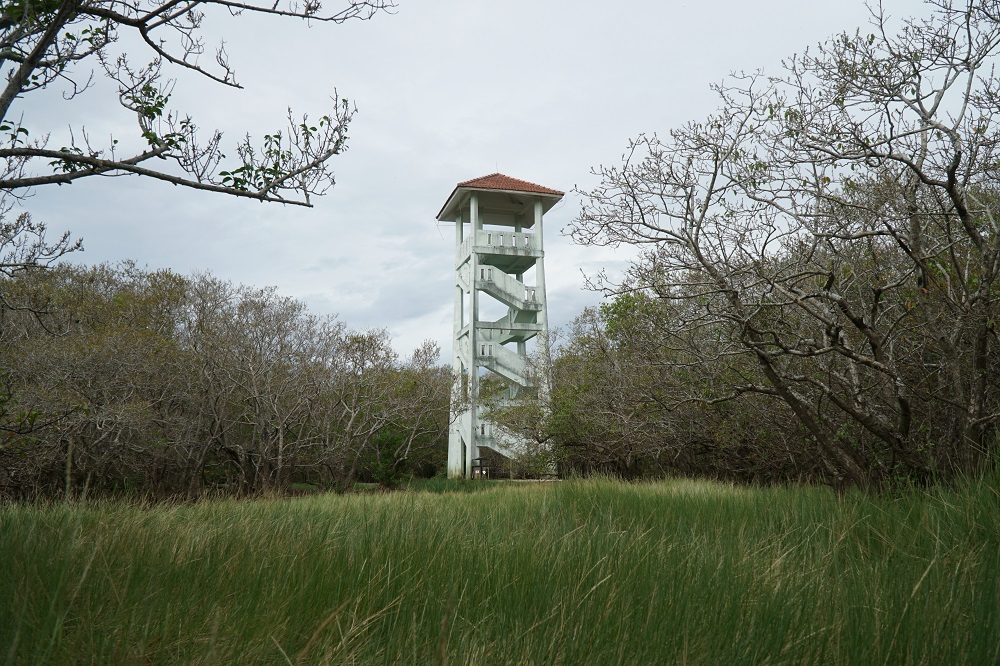
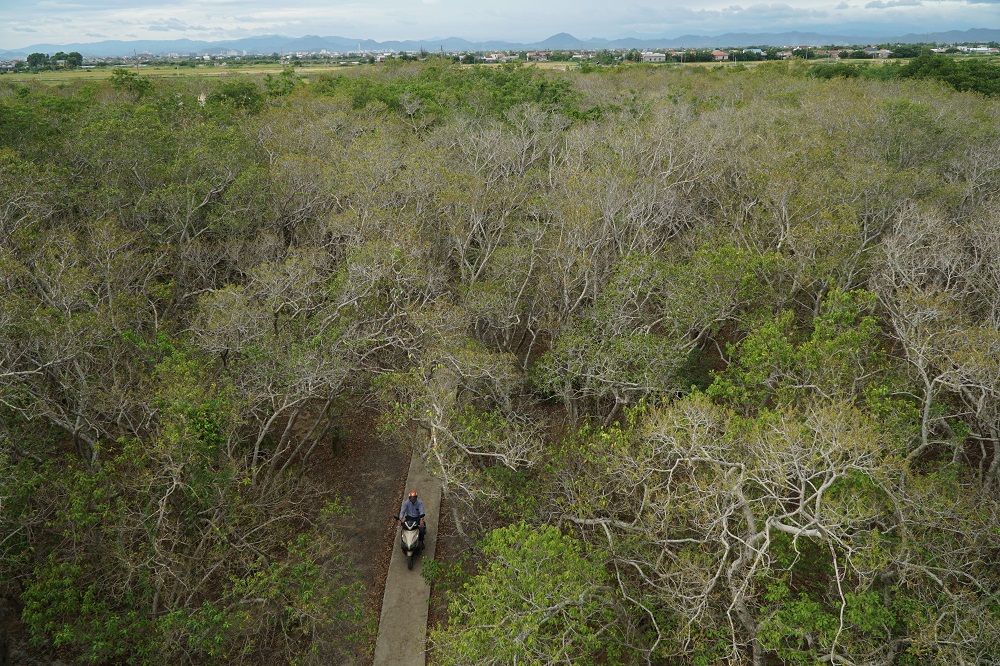
Deep within Rú Chá stands an observation tower. Knowing the view from the top is always rewarding, I climbed the steps. Standing alone on the upper level, I took in the crisp air and serene landscape: thousands of chá trees just beginning to bloom in greenish-yellow, the vast expanse of Tam Giang Lagoon stretching to the horizon, and the new bridge connecting Hải Dương and Thuận An across the estuary.
A Green Shield
Although milky mangrove sap is toxic—earning the tree its nickname, the “blinding tree”—its vital importance to surrounding communities is unmistakable. Thriving in the brackish waters of Tam Giang Lagoon, these resilient trees serve as a natural barrier, protecting coastal villages and soil from harsh winds and severe erosion. The forest is also a vital haven for crabs, fish, and birds. So essential is this ecosystem to the people of Thuận Hoà Village that local tradition includes a stern warning passed down through generations: “Rú tàn thì làng mạt”—When the forest withers, the village founders.
A Sanctuary for Faith
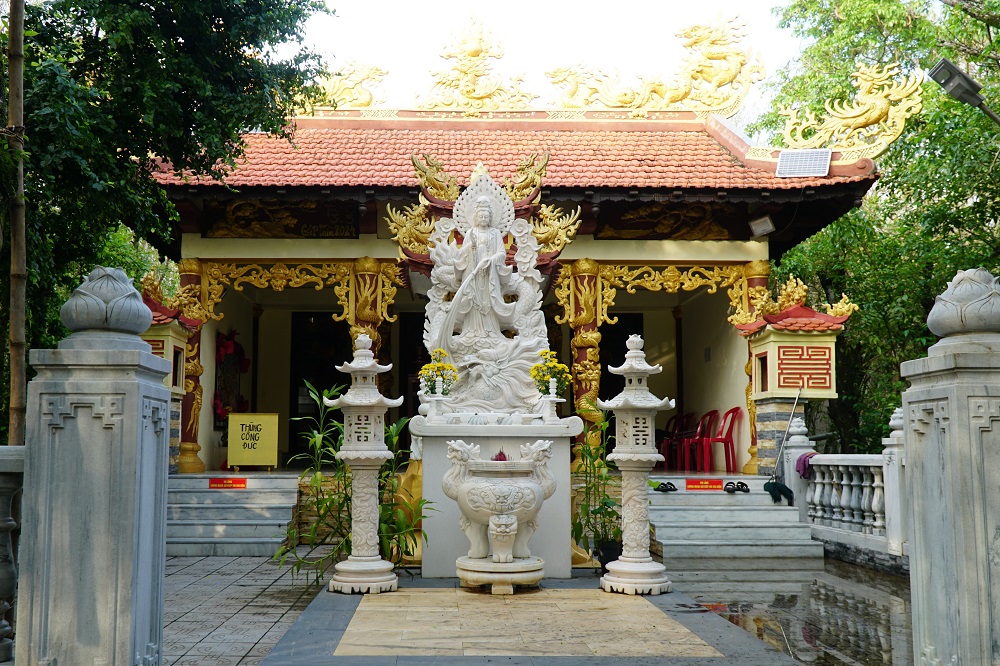
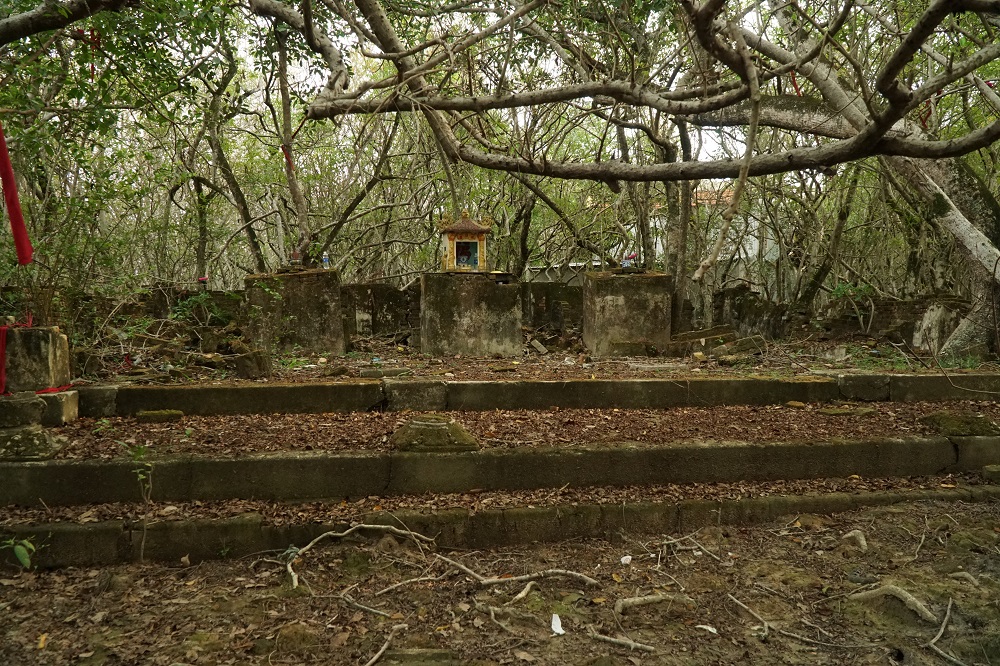
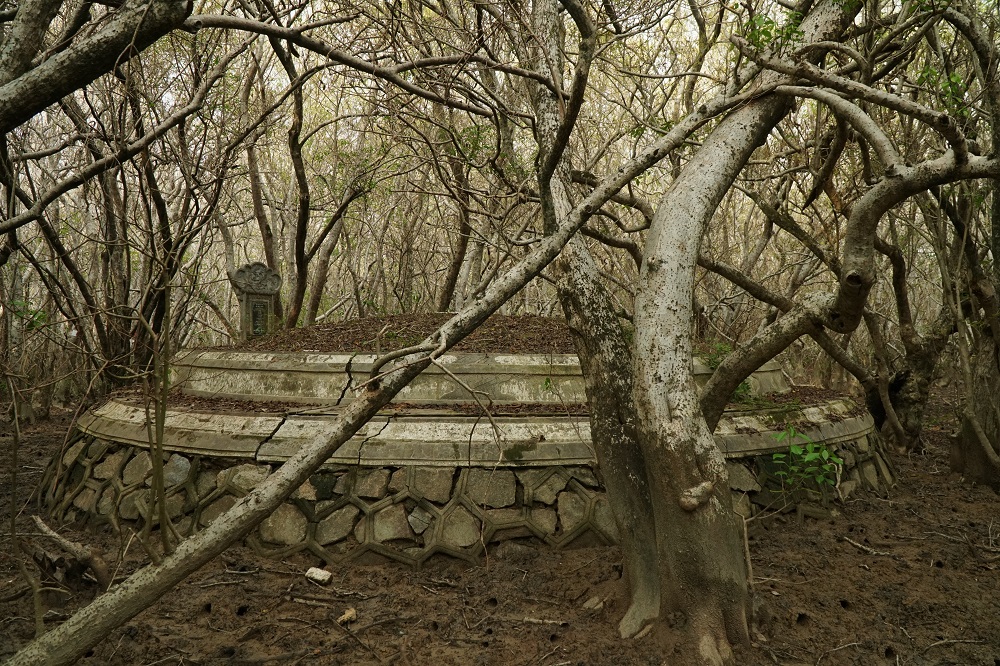
Beyond shielding the coastline during violent storms, Rú Chá serves as a sacred landscape. Scattered beneath the shade of the chá trees lie several dozen ancestral graves resting in peace. At the heart of the forest sits a Mother Goddess temple alongside the concrete foundation of a former village communal house.
Local legend holds that during a severe flood, a wooden incense holder floated down from Hòn Chén Temple—where the Mother Goddess Thiên Y Ana is worshipped—and washed ashore here. Viewing it as a divine sign, villagers established a humble temple on four wooden posts to honor her. Over decades, the original shelter fell into disrepair until 2024, when it was reconstructed through donations from devotees. Although the building was entirely renewed, Mr. Đặng Duy Bản, the primary temple keeper, carefully preserved several wooden fragments from the original structure as keepsakes.
Echoes of War
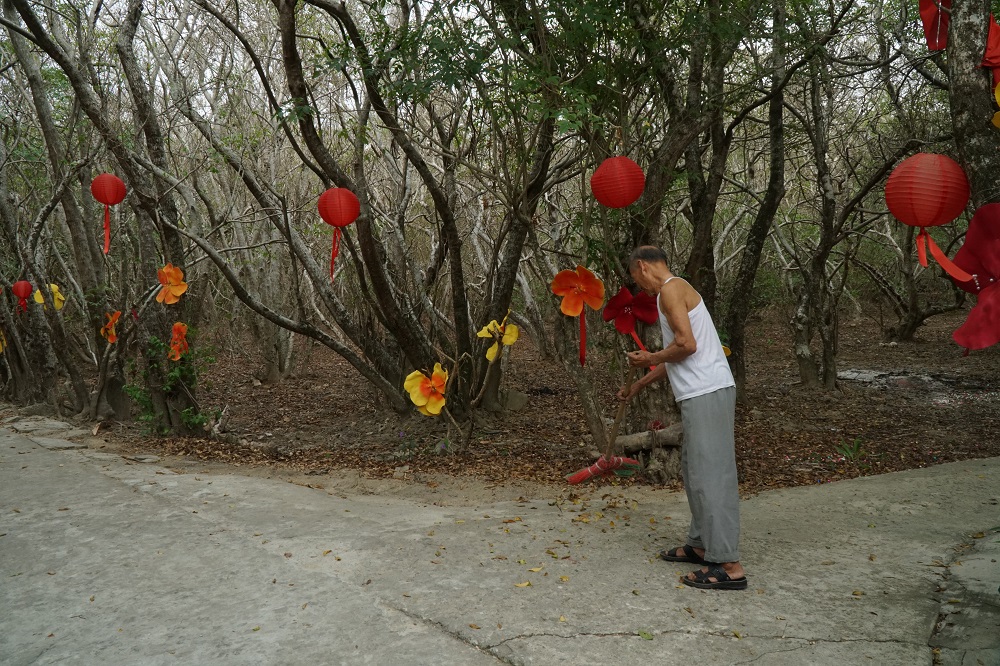
After taking in the sweeping views from the observation tower, I walked over to the temple and found Mr. Bản sweeping fallen leaves from the courtyard. He looked up and smiled when I asked, “Good morning, sir. May I ask if there is still a secret shelter here that hid revolutionary soldiers during the war?”
“I noticed you spent a long time observing the rú earlier,” he replied. “Asking a question like that tells me you know your history. Come inside, sit down, and let’s talk.”
I followed him and sat on a plastic chair facing the tiger altar on the veranda. Putting the broom aside, he began sharing his long history with the temple and Rú Chá. “There was indeed a hidden shelter beneath this temple,” he said. “It could hold eight people and was built using clever techniques so it would never be discovered.”
Mr. Bản first began helping his grandfather care for the temple when he was just twelve years old, assisting in keeping hidden soldiers safe. In his eighties, after decades of devotion to the Mother Goddess tradition, this holy site remains central to his life.
When asked if the wartime bunker still exists today, he shook his head with a touch of regret. “It’s a pity we couldn’t preserve it when we rebuilt the temple.”
Behind the temple lies the concrete foundation of the former communal house, where villagers once honored community founders and gathered for important decisions.
“Every time the village held its bi-annual thanksgiving ceremonies at the communal house, extra food offerings were set aside and quietly passed to the soldiers hiding in the shelter,” Mr. Bản recalled.
When South Vietnamese authorities discovered that local villagers were harboring soldiers within Rú Chá, they forced the community to relocate their communal house further inland to the main residential area.
A Refuge in Peace
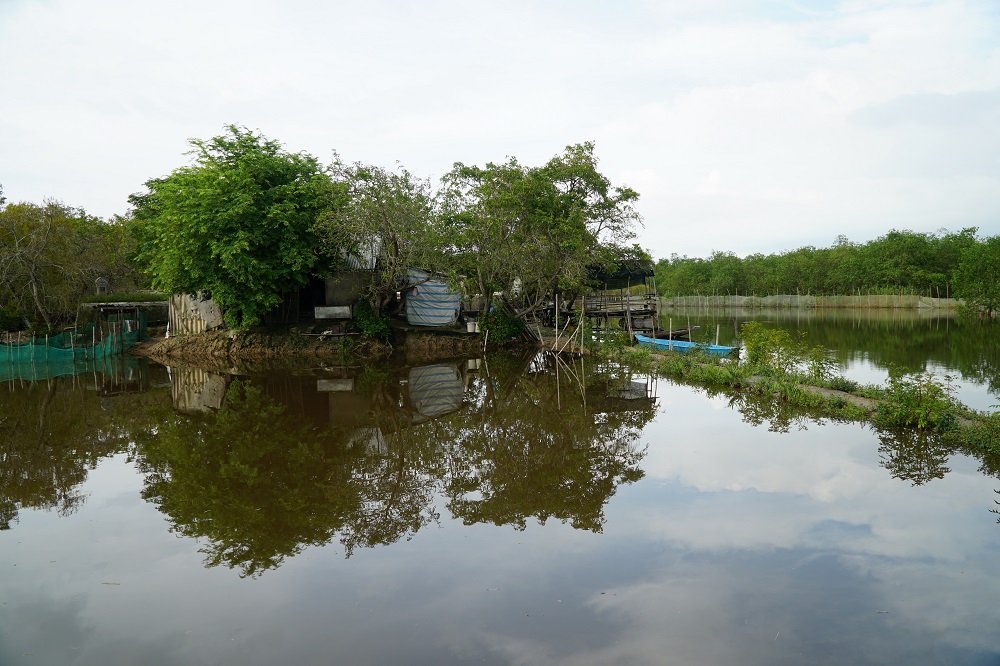
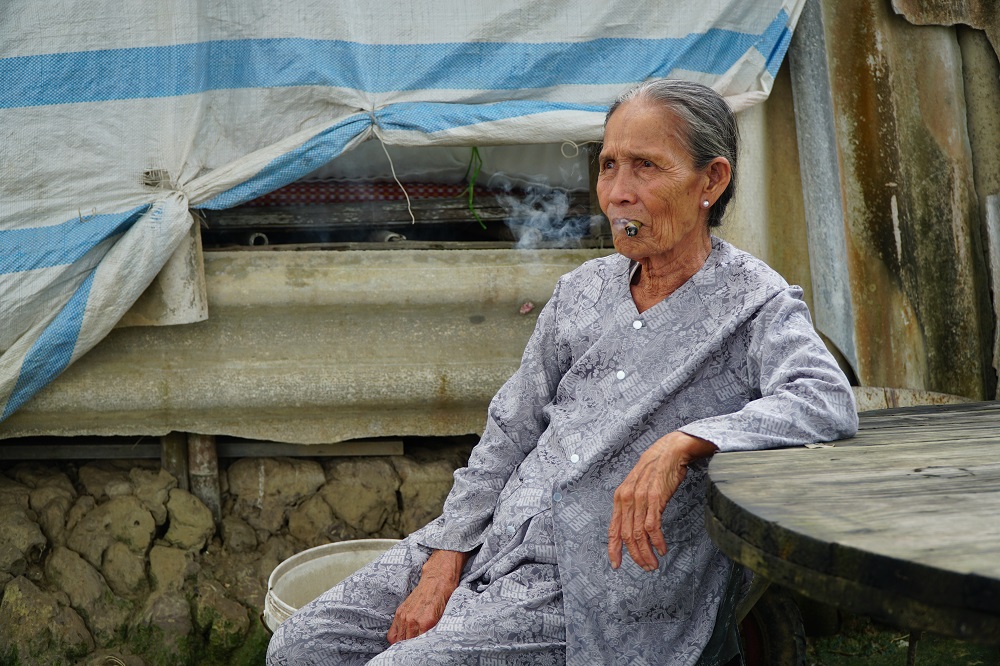
When the war ended and Vietnam unified, peace returned to Rú Chá. However, a new threat emerged as trees were cut down for firewood. In 1986, Mr. Nguyễn Ngọc Đáp and his wife, Mrs. Hồng, volunteered to move into the forest as guardians. In exchange, they were granted permission to raise and harvest seafood in the surrounding waters. As a veteran who lost an eye during the war, Mr. Đáp was discharged early from service.
“Losing an eye to a B-52 strike actually saved my life in the end,” Mr. Đáp remarked thoughtfully.
Living in near solitude in a basic cottage without running water or electricity, the couple found a deep sense of purpose here. They endured years of hardship off the grid to raise and support their ten children. Though their children are now grown with families of their own and they have a home in the village, the elderly couple chooses to remain rooted in the mangrove forest, earning them the affectionate local nickname “the Robinson Crusoes of Rú Chá.”
“We’ve grown used to this way of life and love the peace,” Mr. Đáp said softly. “It’s much too noisy back in the village.”
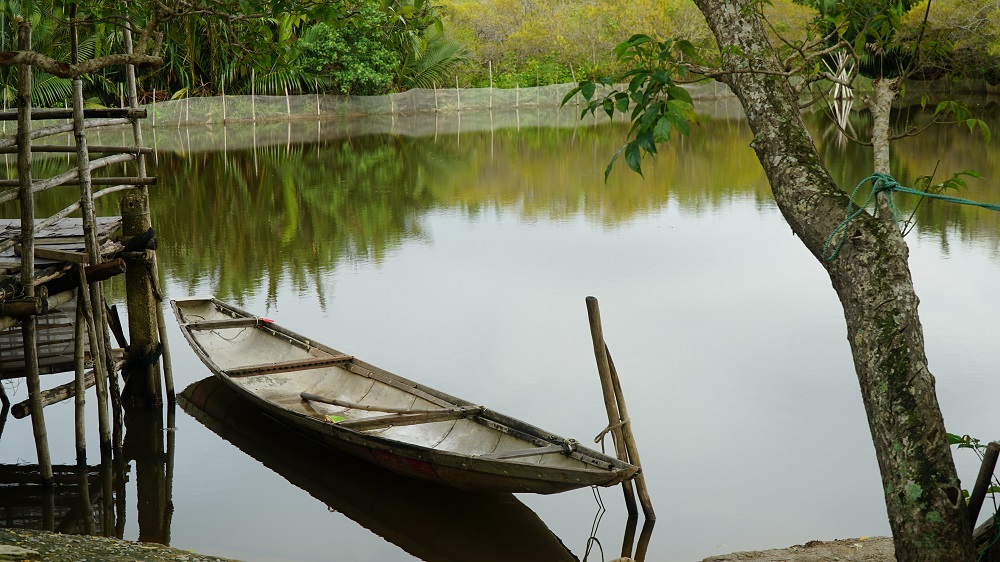
Over the years, the couple began serving fresh, locally harvested seafood to visitors seeking a quiet meal amidst nature. Having enjoyed Mrs. Hồng’s home-cooked dishes inside their simple bamboo pavilion, I can attest to the effortless charm of the experience.
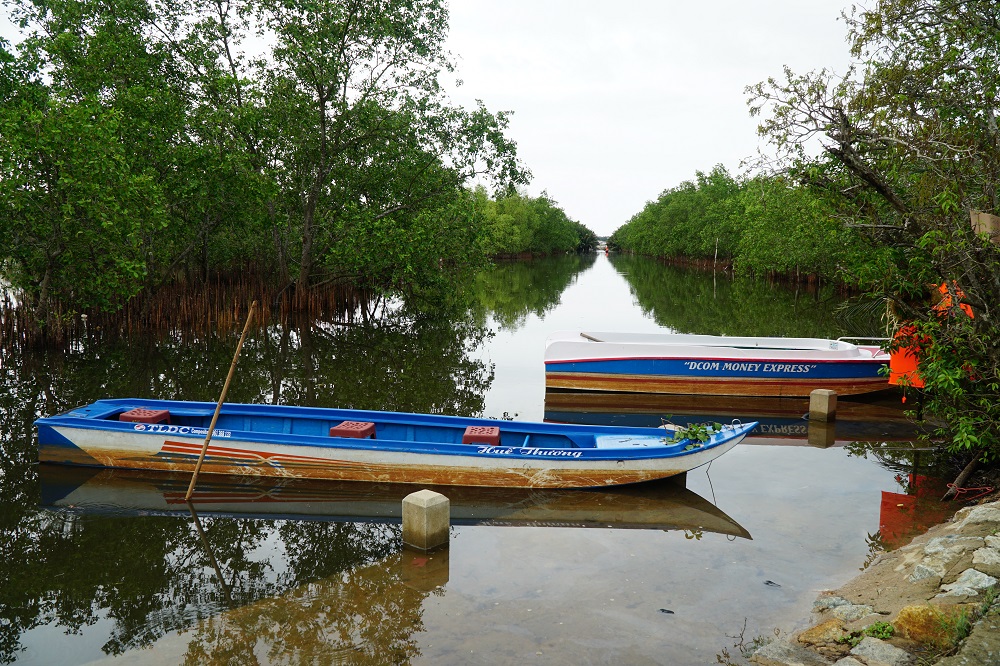
Today, Rú Chá thrives in quiet tranquility as a cherished eco-tourism destination, particularly around mid-September when the chá blossoms turn vibrant yellow at peak bloom. Local boat services now guide visitors along quiet waterways winding deeper into the forest, past newly planted mangrove palms (dừa nước) and mangrove apples (bần chua).
Rú Chá is far more than a coastal forest protecting Thuận Hoà Village; it is a living refuge—always welcoming those drawn to its blooming golden canopy, its winding mangrove waters, and the enduring stories rooted within its soil.
Lan Huế
Huế, August 30, 2026